

Archaeology Vrijthof
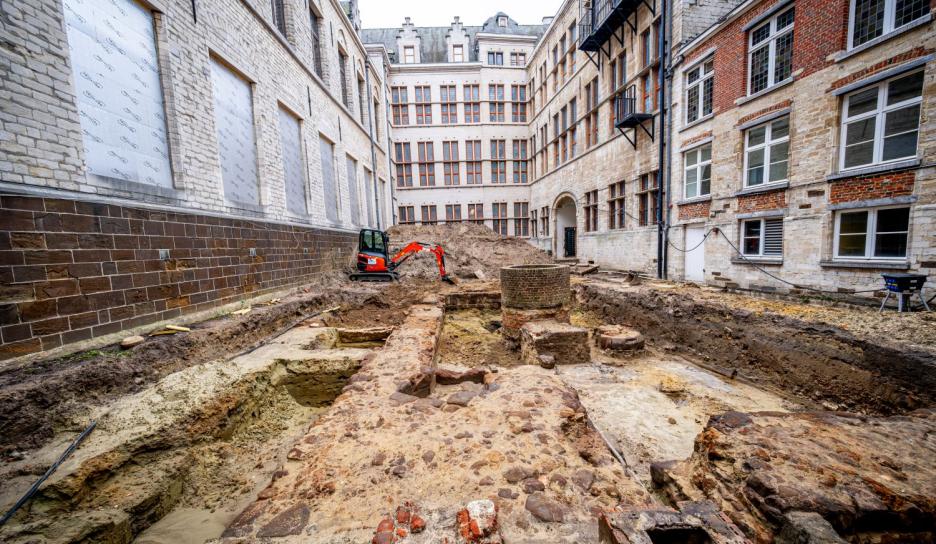
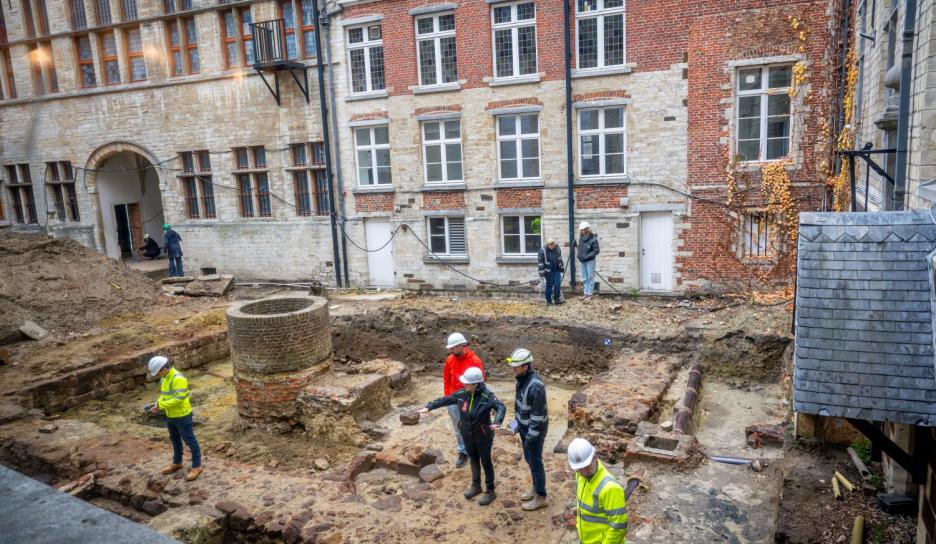
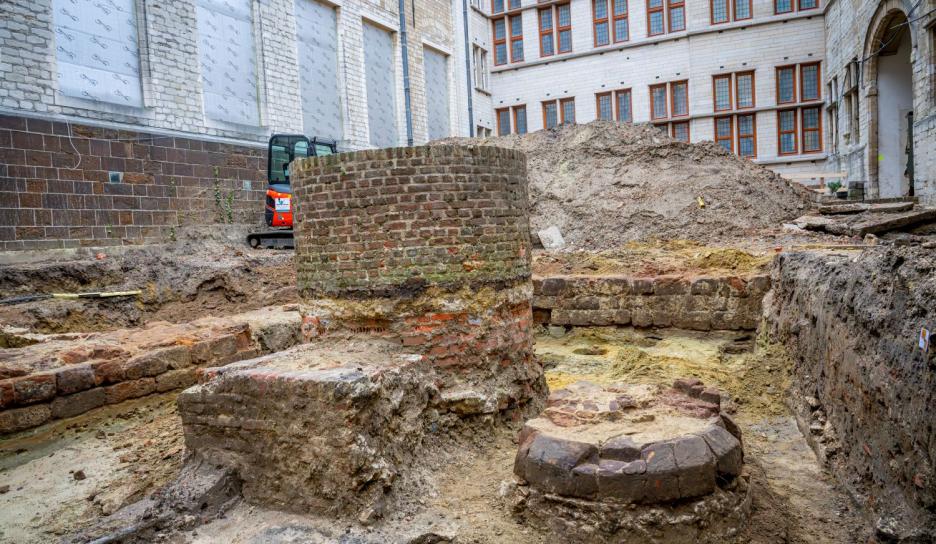
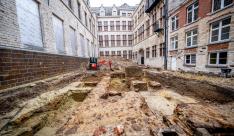
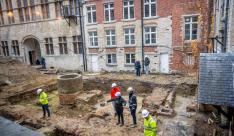
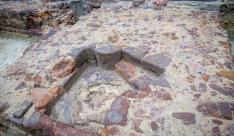
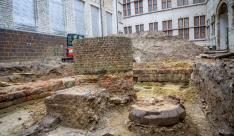
We are carrying out an archaeological study in the inner garden of the Vrijthof. We found remains of a medieval stone house.
What did we find?
Remains of the house 'De Steen':
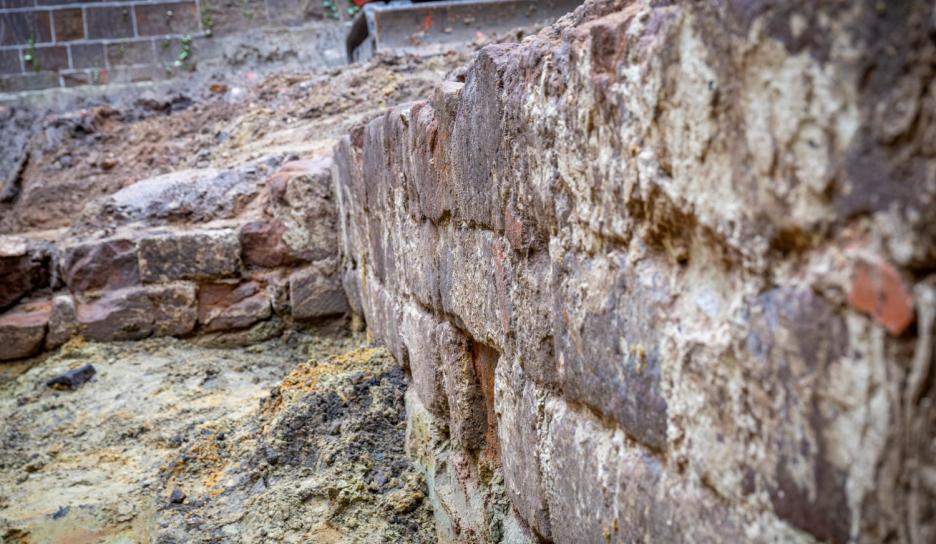
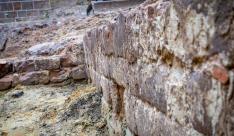
- We found wide, solid walls made of Brussels iron sandstone.
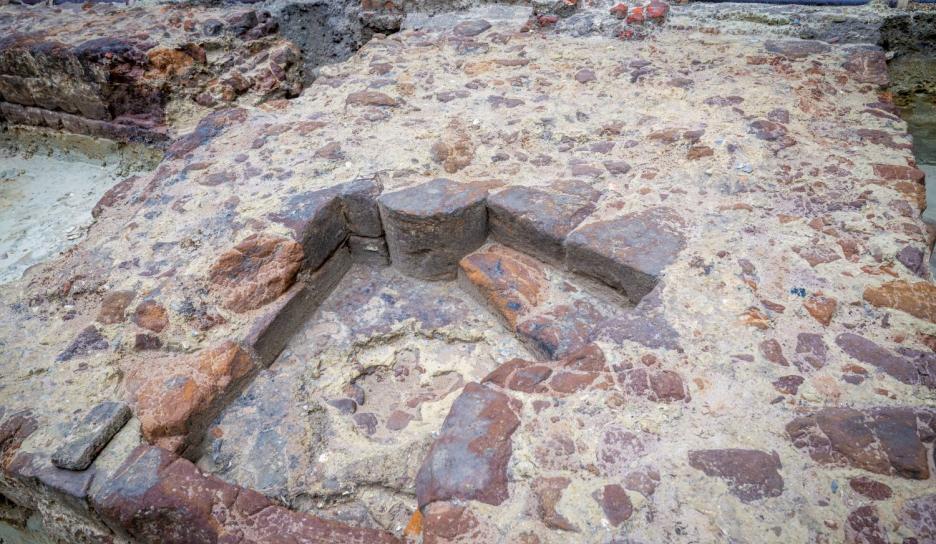
- Under the foundations we found layers that were probably used as leveling layers and floor levels. These date from the construction period of the house.
Older traces under the building:
- Post holes from a wooden structure
- A waste pit with animal bones and pottery
Other finds:
- Walls made of brick and natural stone
- A deep pit with pottery, possibly a sand extraction pit
History of the house 'De Steen'
We found the walls of the house ‘De Steen’ from the 12th–13th century. We already knew this house existed thanks to KU Leuven research from 1980.
- It was an important house in the Proefstraat (now Naamsestraat). It belonged to influential families.
- The first written mention dates from 1263.
- The house was built with large blocks of iron sandstone. It is one of the oldest stone houses ever found in Leuven. At that time, most houses were made of wood or timber frame.
- The walls are more than 1 metre thick.
1439: The house disappears during the redesign of the Grote Markt
In the past, the Grote Markt was a narrow street between the churchyard wall and stone patrician houses. Around 1439, space was created to build the Gothic city hall:
- The Romanesque St Peter’s Church was replaced by the current Gothic church.
- The churchyard became smaller.
- Several patrician houses were demolished, including the house De Steen.
Parts of these houses were uncovered during the excavations. Other parts still form the cellars of the city hall, under today’s Grote Markt.
What happens to the finds?
- The stone remains are covered again. This is the best way to preserve them for future generations.
- Other finds, such as coins, pottery and animal bones, are examined. After that, they go to the official archaeological depot of the province.
New plans for the Vrijthof
During the restoration of the city hall, the Vrijthof will become a green garden. A sloping path will connect Naamsestraat with the new part of the city hall.
More archaeological excavations will follow during the restoration works, for example at the corner of the Grote Markt and the Boekhandelstraat.
The archaeological works are carried out by Monument Vandekerckhove nv.
Do you have a question?
Contact us. We are happy to help you.


 Report an error